
Kilimanjaro Climbing and Trekking tours
Kilimanjaro Climbing and Trekking tours
Kilimanjaro Climbing and Trekking tours
Marangu Route Kilimanjaro Itinerary (5 Days)
Price From 1950 USD Per person
Hike the Kilimanjaro and experience unforgettable wildlife journeys through US
The Marangu Route Kilimanjaro itinerary is one of the most popular options for trekkers seeking a structured and comfortable climb. Known as the only Kilimanjaro hut route, the Kilimanjaro Marangu Route offers 5-day and 6-day itineraries with overnight stays in mountain huts instead of camping. This route is ideal for those looking for a shorter climb with well-established paths on Mount Kilimanjaro.
Duration: 5 or 6 days
Difficulty: Medium
Scenery: Good
Traffic: High
Upon arrival at Kilimanjaro International Airport, you will be met and transferred for overnight accommodation green mountain hotel B&B. Your head guide will meet you for your briefing, gear check and arrange for you to hire any equipment you may need.
Kilimanjaro Marangu Route Overview
Often referred to as the “Coca-Cola Route,” the Marangu Route follows a direct path to the summit and uses the same trail for ascent and descent. While it is considered one of the easier paths in terms of navigation, the shorter duration means less time for acclimatization, which can make the climb more challenging than expected.
Trekkers pass through diverse landscapes—from lush rainforest to open moorland and alpine desert—before reaching the summit at Uhuru Peak. The route is popular due to its hut accommodation and relatively shorter itinerary, making it a common choice among Kilimanjaro climbing tours.
Marangu Route 5 Day Itinerary
Elevation: 1830m/6000ft to 2740m/9000ft
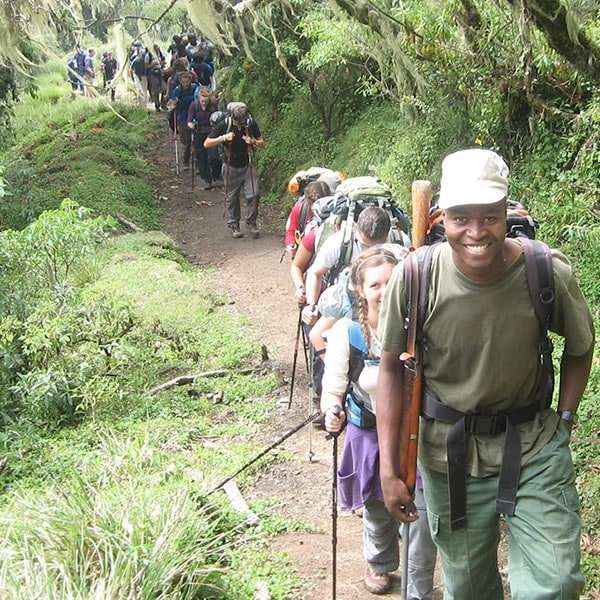
Departing from Moshi a 45-minute drive will take you through the Village of Machame to the Kilimanjaro National Park Gate. We will patiently wait for our permits to be issued while watching the hustle and bustle of operations as many crews prepare for the journey ahead Enjoy the beautiful rainforest scenery and windy trails while your guide tells you about the local flora and fauna and natural wildlife. At these lower elevations, the trail can be muddy and quite slippery. We highly recommend gaiters and trekking poles here.
Elevation: 2740m/9000ft to 3690m/12,100ft
After a good nights sleep and a hearty breakfast, we emerge from the rain forest and continue on an ascending path, through heathland, looking for giant lobelias and groundsels. Continue up into open moorlands where small shrubs are the main vegetation. Stop halfway for lunch, to enjoy amazing views of Mawenzi. Arrive at the Horombo Huts late afternoon beneath the spectacular Kibo Summit viewpoint. Temperatures begin to drop.
Elevation: 3690m/12,100ft to 4695m/15,400ft
After breakfast, we continue on through the dwindling heathland that blends into a moonscape as you enter the sweeping saddle connecting Mawenzi and Kibo. Here while we stop for lunch, and later when you cross this surprisingly large saddle, you can examine the summit climb up Kibo that you will be starting in just a few hours.
Elevation: 4695m/15,400ft to 5895m/19,340ft
Descent to 3690m/12,100ft
Excitement is building as morning comes with an early start between midnight and 2 a.m. This is the most mentally and physically challenging portion of the trek.
We continue our way to the summit in a switchback formation through trying to stay warm and focused on the amazing sense of accomplishment that lies ahead. With a switchback motion, we ascend through heavy scree and possibly snow towards Gillman’s Point on the crater rim. You will be rewarded with the most magnificent sunrise during your short rest here. Faster hikers may view the sunrise from the summit. From here on your remaining 1 hour ascent to Uhuru Peak, you are likely to encounter snow all the way.
Congratulations, one step at a time you have now reached Uhuru Peak the highest point on Mount Kilimanjaro and the entire continent of Africa!
After photos, celebrations and maybe a few tears of joy we take a few moments to enjoy this incredible accomplishment. We begin our steep descent down to Mweka Camp, stopping at Barafu for lunch and a very brief rest. We strongly recommend gaiters and trekking poles for uncooperative loose gravel and volcano ash terrain. Well-deserved rest awaits you to enjoy your last evening on the mountain. Overnight Mweka Camp.
Elevation: 3690m/12,100 to 1830m/6000ft
After breakfast and a heartfelt ceremony of appreciation and team bonding with your crew, it’s time to say goodbye. We continue the descent down stopping at the Mandara Huts for lunch. Remember to tip your guides, cooks, and porters, since you will be leaving them here. You return back to the Marangu Park Gate and receive your summit certificates. As the weather is drastically warmer, the terrain is wet, muddy and steep and we highly recommend Gaiters and trekking poles. From the gate, a vehicle will meet you to drive you back to your hotel in Moshi (Arusha} Enjoy a long overdue hot shower, dinner, and celebrations!!
Marangu Route Huts & Accommodation
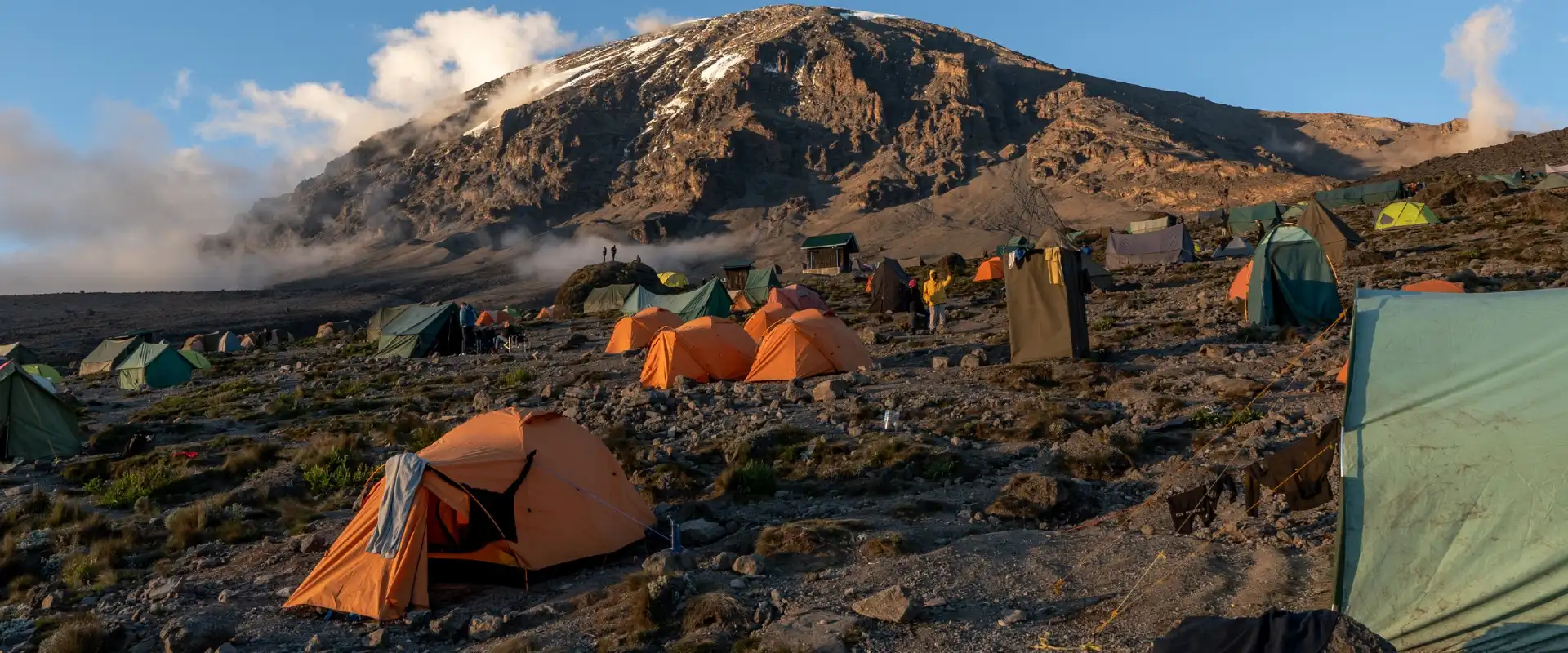
One of the key advantages of the Marangu Route is its hut accommodation. Unlike other routes, trekkers stay in shared mountain huts equipped with basic sleeping arrangements and dining areas.
The huts at Mandara, Horombo, and Kibo provide shelter from weather conditions, making this route more comfortable compared to camping-based Kilimanjaro climbing tours. However, they can be busier due to the route’s popularity.
Marangu Route Difficulty
The Marangu Route difficulty is generally considered moderate, making it appealing to beginners. However, the shorter itinerary means less time for acclimatization, which can reduce summit success rates compared to longer routes.
For better results, many climbers choose the 6-day option to allow more time for altitude adjustment. Proper pacing, hydration, and guidance are essential for a successful summit attempt.
Marangu Route Huts & Accommodation
One of the key advantages of the Marangu Route is its hut accommodation. Unlike other routes, trekkers stay in shared mountain huts equipped with basic sleeping arrangements and dining areas.
The huts at Mandara, Horombo, and Kibo provide shelter from weather conditions, making this route more comfortable compared to camping-based Kilimanjaro climbing tours. However, they can be busier due to the route’s popularity.
Why Choose the Marangu Route?
- Only Kilimanjaro hut route (no camping required)
- Shorter itinerary (5–6 days)
- Well-defined and established trail
- Suitable for beginners with good fitness
- Comfortable sleeping arrangements
FAQ – Marangu Route
- Q: What is the best time to climb the Marangu Route?
A: The best months are January–March and June–October, when weather is dry and temperatures are moderate. - Q: How long does the Marangu Route take?
A: Trekkers can choose a 5-day or 6-day itinerary depending on experience and acclimatization needs. - Q: Are the huts comfortable?
A: Yes, the Marangu Route is the only hut-based route. Huts provide bunk beds, communal areas, and meals prepared by the climbing crew. - Q: Is the Marangu Route suitable for beginners?
A: Yes, it is considered moderate difficulty, but proper fitness and pacing are essential for a successful summit. - Q: What is the summit success rate?
A: The success rate is slightly lower on the 5-day itinerary due to shorter acclimatization. Choosing 6 days improves your chances. - Q: Do I need trekking poles and gaiters?
A: Yes, poles help with steep trails and loose gravel, while gaiters protect your boots in muddy rainforest sections.
Plan Your Kilimanjaro Climb
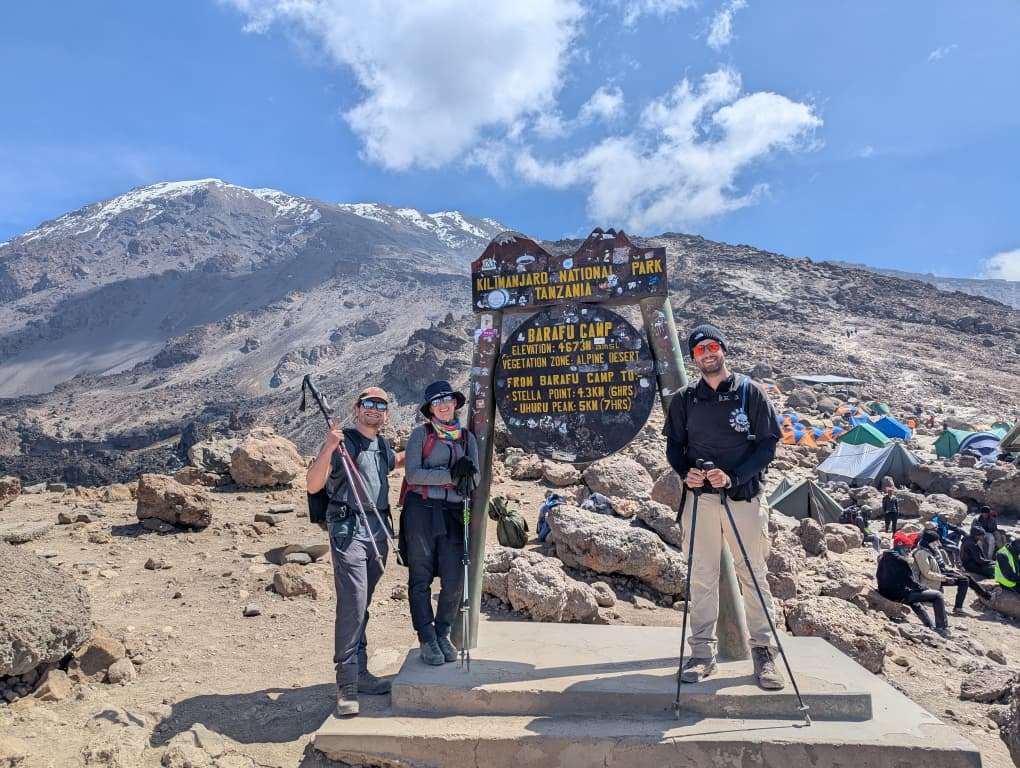
Ready to take on the Kilimanjaro Marangu Route? Our expert team will help you plan every detail—from preparation to summit—ensuring a safe and unforgettable experience on Mount Kilimanjaro.