
Kilimanjaro Climbing and Trekking tours
Kilimanjaro Climbing and Trekking tours
Kilimanjaro Climbing and Trekking tours
Serengeti National Park – Tanzania’s Iconic Wildlife Paradise
Africa’s most legendary
The Serengeti National Park is one of Africa’s most legendary wildlife destinations, renowned for its endless plains, extraordinary biodiversity, and the world-famous Great Migration. Located in northern Tanzania, it forms part of a vast ecosystem that stretches into Kenya’s Maasai Mara, supporting one of the most spectacular natural events on Earth.
Overview of Serengeti National Park
The Serengeti is Tanzania’s oldest and most visited national park, covering approximately 14,763 square kilometres of protected savannah, woodlands, and riverine forests. It is a designated UNESCO World Heritage Site and is often listed among the natural wonders of the world.
The park lies about 335 km from Arusha, making it accessible by both road and air, and serves as a gateway to northern Tanzania’s safari circuit.
The Great Wildebeest Migration
One of the most powerful wildlife spectacles on the planet takes place in the Serengeti National Park: the Great Migration.
Each year, over 1.5 million wildebeest, accompanied by hundreds of thousands of zebras and gazelles, move in a continuous circular journey in search of fresh grazing. Along the way, they face dramatic river crossings, predators, and harsh environmental challenges.
Highlights include:
- Massive herds stretching over 40 km in length
- River crossings filled with crocodiles
- Peak calving season producing thousands of newborns daily
- Constant predator-prey interactions across the plains
This cycle is driven purely by rainfall patterns and grazing availability, making it unpredictable yet endlessly fascinating.
Wildlife in Serengeti National Park
Beyond the migration, the Serengeti supports one of the richest ecosystems in Africa.
Large Mammals
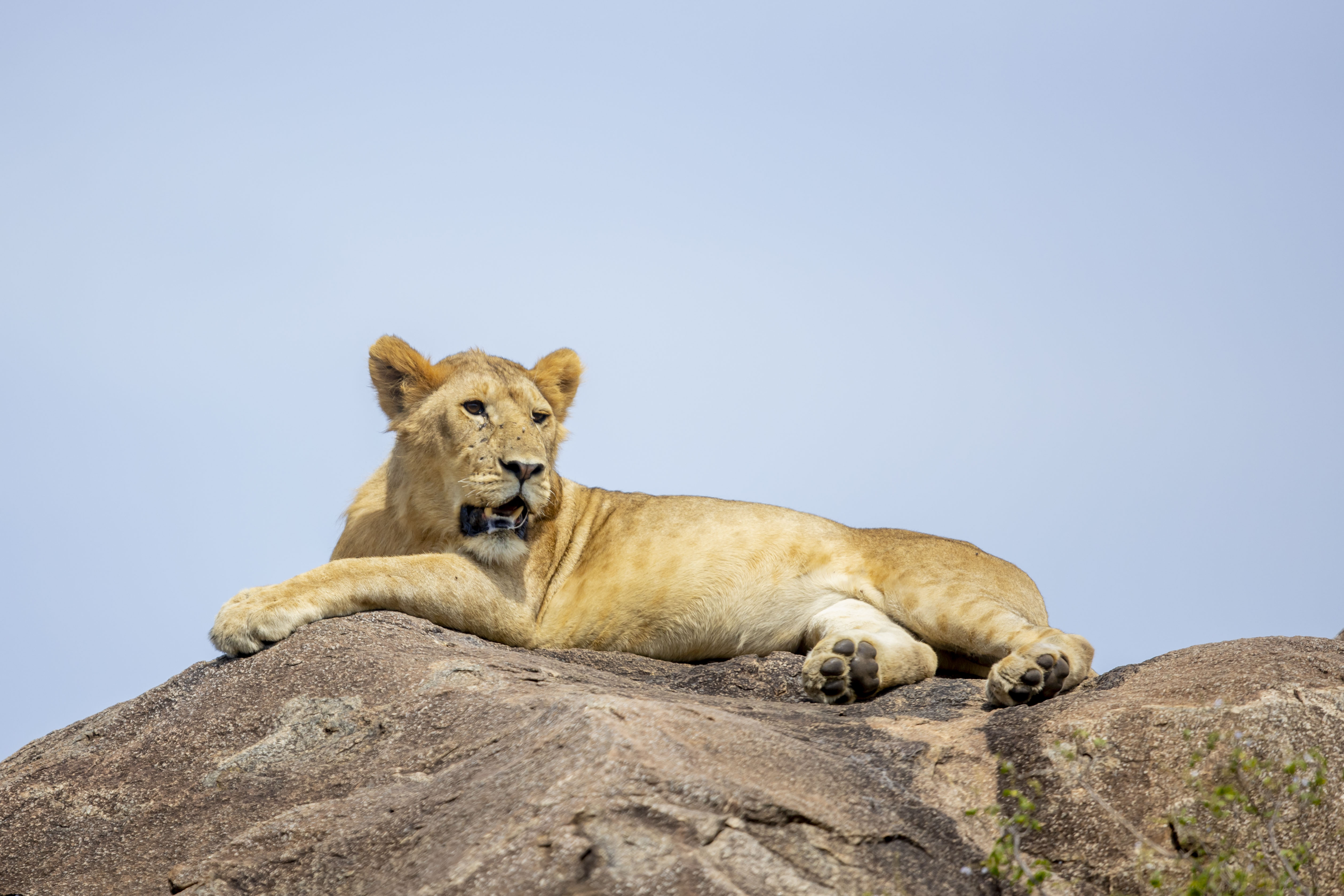
- Lions in large prides dominating the plains
- Elephants moving in family groups
- Buffalo herds roaming freely
- Giraffes browsing acacia trees
- Antelopes including impala, topi, eland, and gazelles
Predators
- Leopards along riverine forests
- Cheetahs on the southeastern plains
- Spotted hyenas and several jackal species
- Smaller predators like serval cats and aardwolves
Birds and Smaller Wildlife
The park is also a paradise for bird lovers, with over 500 recorded bird species, including:
- Ostrich
- Secretary bird
- Martial eagle
- Flamingos (seasonal nearby wetlands)
Reptiles, insects, and smaller mammals also thrive here, from agama lizards to dung beetles playing vital ecological roles.
Landscape and Scenery
The Serengeti is defined by its vast, open landscapes that seem to stretch endlessly toward the horizon. However, the park is far more diverse than it first appears.
You’ll find:
- Golden savannah plains
- Granite kopjes rising from the grasslands
- River systems lined with fig and acacia trees
- Seasonal wetlands and flowering grasslands after rains
- Termite mounds shaping the ecosystem
The changing seasons transform the park dramatically—from dry golden expanses to lush green carpets.
Things to Do in Serengeti National Park
Visitors to the Serengeti National Park can enjoy a wide range of safari experiences:
- Game drives across different regions of the park
- Hot air balloon safaris at sunrise
- Walking safaris with guides in designated areas
- Bush picnics and outdoor dining experiences
- Cultural visits to nearby Maasai communities
- Photography safaris focused on wildlife and landscapes
Best Time to Visit Serengeti National Park
- December to July: Best for witnessing the Great Migration
- June to October: Excellent for predator sightings and dry-season wildlife viewing
- November & April–May: Green season with fewer tourists and lush scenery
Because the migration is unpredictable, staying at least 3–5 days increases your chances of witnessing major herds and river crossings.
Accommodation Options
The Serengeti offers a wide range of accommodation, including:
- Luxury lodges
- Tented safari camps
- Mobile migration camps
- Public and private campsites
Many are located inside the park, allowing for immersive wildlife experiences right from your doorstep.
Nearby Attractions
A safari in the Serengeti is often combined with other northern Tanzania highlights:
- Ngorongoro Crater
- Olduvai Gorge (important archaeological site)
- Lake Manyara National Park
- Tarangire National Park
- Ol Doinyo Lengai volcano
- Lake Natron flamingo areas
Final Thoughts
The Serengeti National Park is more than a safari destination—it is a living, breathing ecosystem where nature unfolds on an epic scale. From the thunder of migrating herds to the silent stalk of a leopard in the grass, every moment in the Serengeti tells a story of survival, balance, and raw natural beauty.
Plan Your Serengeti Safari
Ready for an unforgettable Serengeti safari? Our expert team will help you plan every detail—from itinerary planning to game drives—ensuring a safe and unforgettable wildlife experience in Tanzania’s most iconic national park.